Bearded Dragon Care Guide
Some links on this page earn us commission at no extra cost to you
Housing
Enclosure Specifications
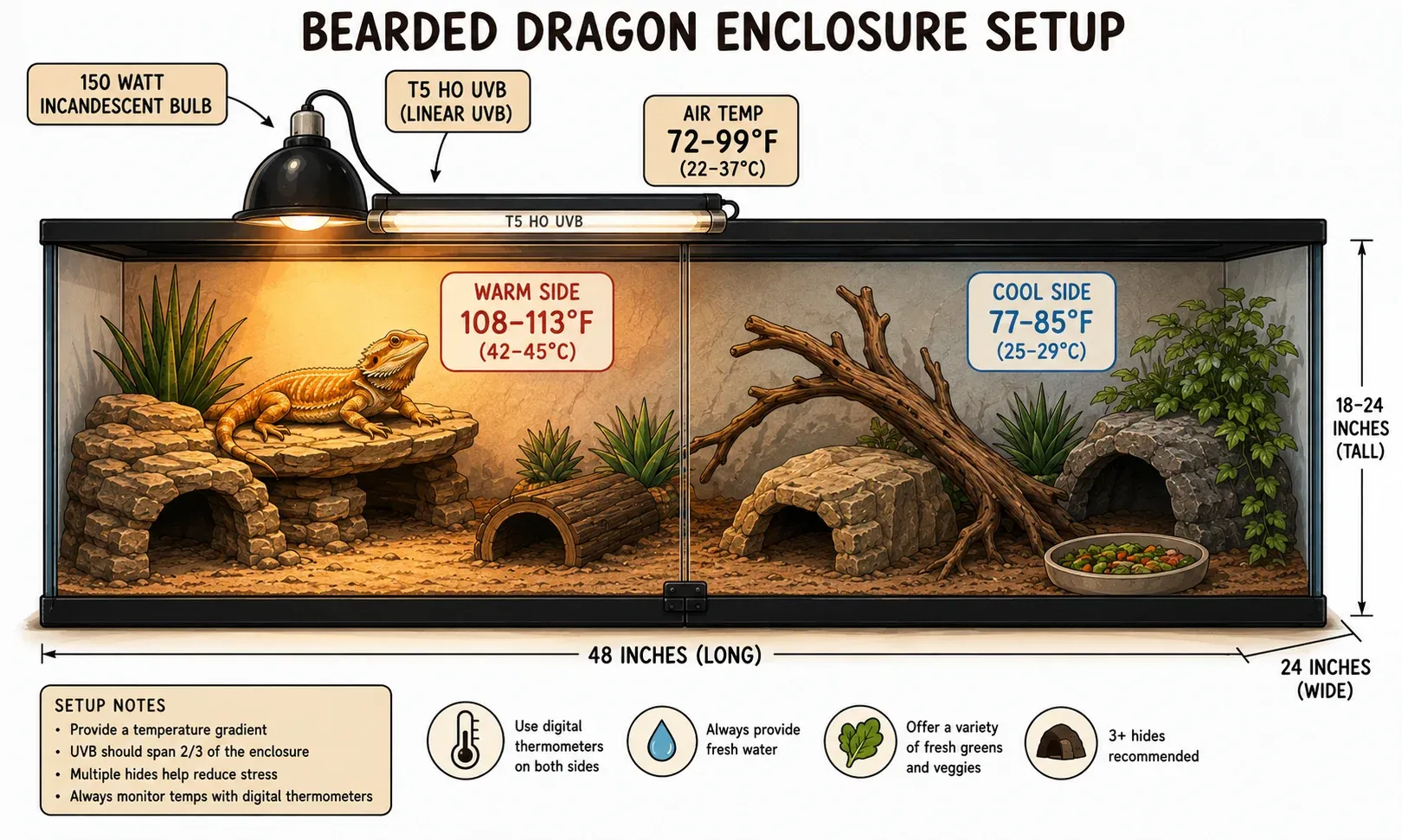
- Minimum Size: 48in x 24in x 18-24in (122cm x 61cm x 46-61cm).
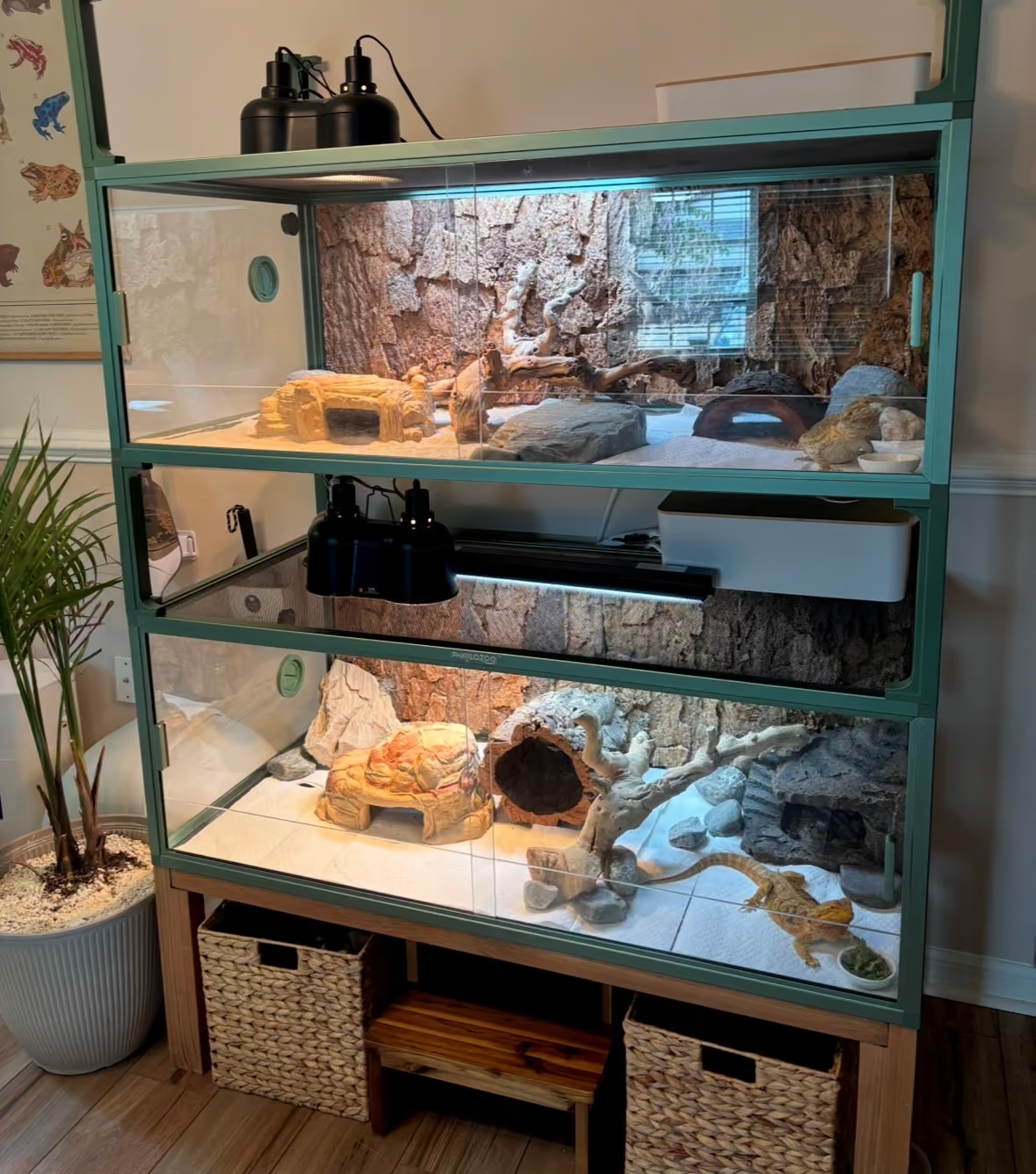
- Enclosure Type: Stackable Phaiolozoo enclosures (available in multiple colors) are recommended for their modularity and ease of maintenance.
Lighting and Heating
- UVB Lighting:
- Bulb Type: T5 HO 10.0 UVA/UVB bulb
- Replacement: Replace every 12 months to ensure optimal UVB output.
- Placement: Position the UVB bulb over the basking area to mimic natural sunlight. For specifics for your enclosure height, click here
- Heat Sources
- Day Heat: 150-watt incandescent bulb.
- Night Heat: 150-watt ceramic heat emitter (safer than incandescent bulbs at night).
- Monitoring: Use digital thermometers (preferably ones that connect to your phone) to track temperatures on both sides of the enclosure. This ensures you’re alerted if a heat lamp burns out.
| Warm Side Surface | Cool Side Surface | Air Temperature |
|---|---|---|
| 108–113°F (42–45°C) | 77–85°F (25–29°C) | 72–99°F (22–37°C) |
Basking and Enrichment
- Basking Surfaces: Use a mix of sandblasted grapevine and basking rocks (which can also serve as hides).
- Enrichment:
- Provide at least three hides (e.g., caves, cork bark logs, or commercial hides).
- Include climbing surfaces (e.g., cork bark, branches, or rocks).
- Offer digging opportunities (e.g., loose substrate or sand dishes).
Substrate Guidelines
Substrate choice depends on the age of your bearded dragon:
- Baby: Use paper towels (easy to clean and safe for accidental ingestion).
- Juveniles: Use paper towels (easy to clean and safe for accidental ingestion).
- Adults: Sand (playsand, NOT calcium sand).
- Seniors: Sand OR paper towels with a sand dish for digging.
- Sterilization: If using sand, bake it at 250°F (121°C) for 30 minutes to sterilize before adding it to the enclosure. Allow it to cool completely before use.
Humidity
- Maintain a low humidity level (30–40%) to prevent respiratory issues.
Diet
| Life stage / Weight | Insects | Greens |
|---|---|---|
| 0-4mo / 5-50g | 15-20 daily | daily |
| 4-12mo / 50-150g | 10-20 every other day | daily |
| 12+ mo / >150g | 10-15 twice weekly | daily |
List of Foods
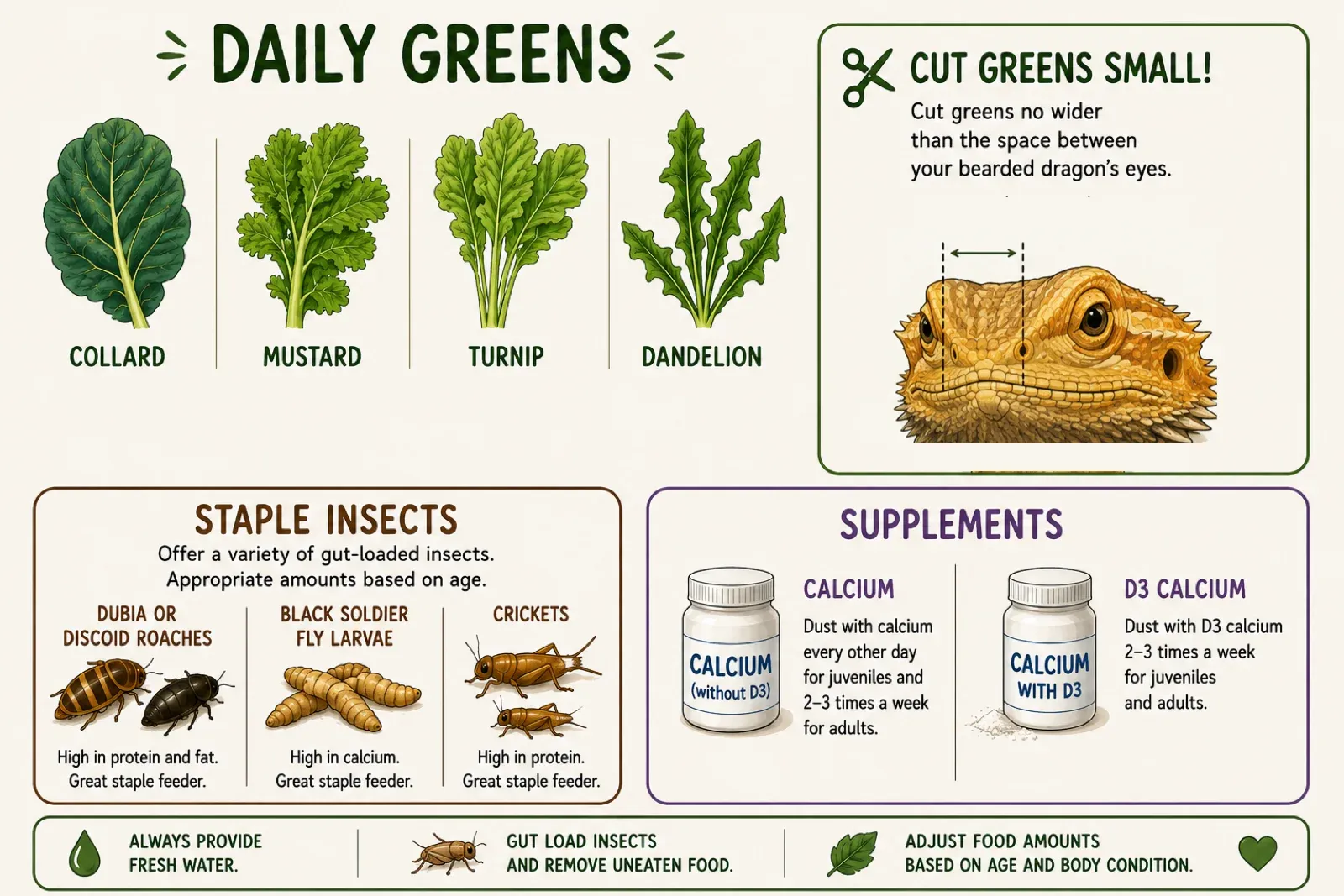
Ensure food size is no wider than the space between the bearded dragon’s eyes
- Daily Greens:
- Collard greens
- Dandelion greens
- Mustard greens
- Turnip greens
- Staple Insects:
- Dubia or discoid roaches
- Crickets
- Black soldier fly larvae
- Feed insects in a separate space than the enclosure to prevent harm being done to your bearded dragon. Insects like crickets can chew on your bearded dragon and cause serious harm. I use a playpen for kittens to feed my reptiles.
Supplementation
- Calcium D3: Dust feeder insects or greens around 2-3 times weekly.
- Seniors: Critical care supplement mixed with water should be put on their greens daily.
Hydration
- Offer filtered running water. If you don’t have a faucet with filtered water to offer your dragon once daily, you can purchase a fountain for their enclosure.
- Misted greens
Care information here is educational and not veterinary advice — for health concerns, consult a qualified reptile veterinarian.